ServicesSolar Panel Repair
Solar Panel Repair in Holladay
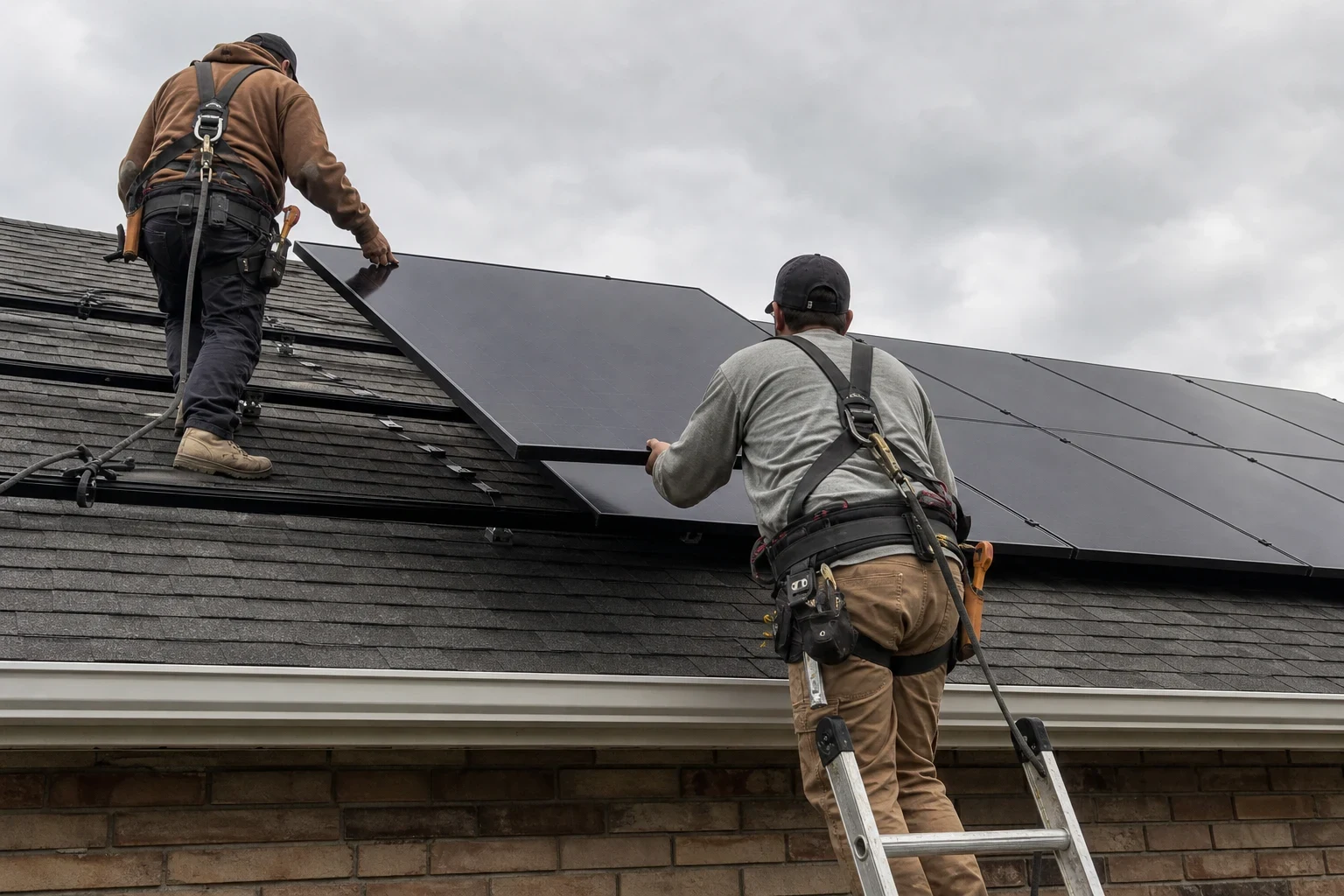
When your system stops pulling its weight, we track down why. We photograph the problem, explain it in plain words, make the fix and show you the finished work. Most repairs start with a short video call so we can look at your monitoring data together.
Getting your panels back to full output
A solar array has more parts than most people realize: the panels, the connectors between them, the wiring runs, the inverter or microinverters, and the monitoring that reports it all. When production drops, the fault is usually in one of those parts, not in the whole system.
Our job is to find that one part, fix it properly and leave the rest alone. Before we touch anything, you get photos of what we found. After the repair, you get pictures of what we did and a fresh look at your production numbers so you can see the difference yourself.
If something turns out not to be worth fixing, we tell you that too, and we explain why.
What a repair visit covers
Monitoring review first
We start with your production history and any error codes. It often points straight to the string, panel or inverter that is lagging.
Inverter and microinverter faults
We test the inverter, read its fault log and check the microinverters or optimizers under each panel. Failed units are replaced and reconnected to monitoring.
Wiring and connector checks
Loose, corroded or chewed connectors are a common cause of lost output. We test each run, replace damaged sections and secure the wiring so it stays off sharp edges.
Damaged panels
Cracked glass, hot spots and browning cells all cut production. We confirm the damage with testing, then replace the panel with a compatible one.
Photo report of the whole job
You get pictures of the problem, the repair in progress and the finished work, plus a short written note on what changed.
When it is time to call about a repair
- Output stays low on sunny days
- Gray skies can pull your numbers down for a few days. If clear, bright days keep producing less than they used to, a component has likely stopped doing its job.
- An alert from the inverter or app
- A healthy inverter normally shows a steady green light. A change in that light, or a fault message from your monitoring app, tells you something in the system has stopped working.
- A panel or string shows nothing
- When one panel or group reads zero while the others keep producing, the cause is often the wiring, a connector or the microinverter behind it.
- Damage you can see after bad weather
- Spring hail and hard winter wind can crack panel glass or pull wiring loose. If you spot a chip, a crack or a hanging wire, stay back and have it looked at.
- The solar breaker won't stay on
- A breaker that keeps tripping usually means trouble in the wiring or the inverter. Leave it switched off and let us track down the cause safely.
- Your monitoring stopped reporting
- It may just be a dropped Wi-Fi signal, or it may be a failed communication unit. Either way, you should be able to see how your system is performing.
How a repair works, start to finish
- 1
A free virtual appointment
We talk on a video call, look at your monitoring app together and ask what you have noticed. Many problems narrow down to one or two likely causes right there.
- 2
On-site testing
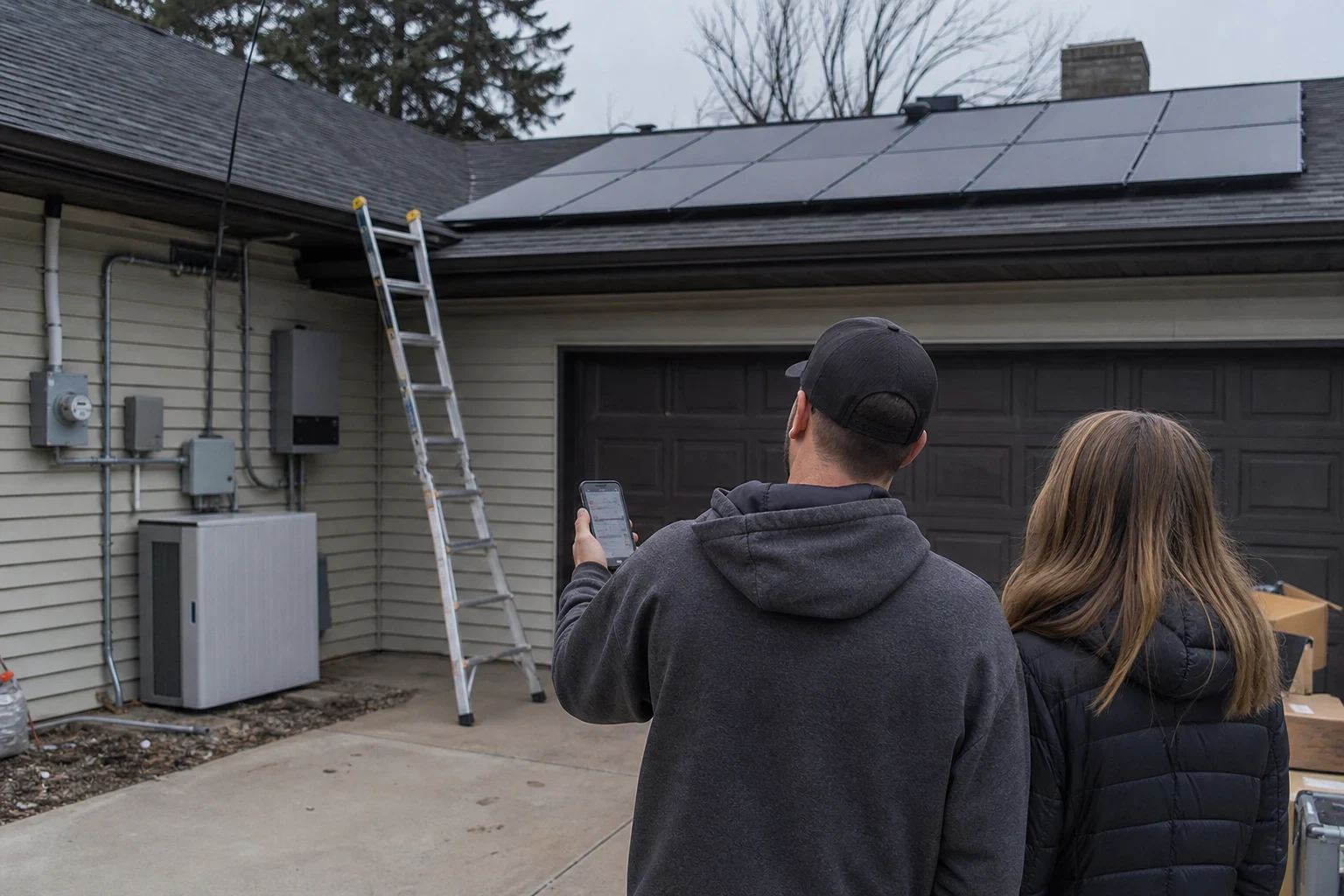
We visit your home, shut the system down safely and test the suspect parts. Every finding is photographed so you see what we see.
- 3
A clear repair plan
You get the images, a plain explanation and a written estimate before any work begins. If a part may be covered by your equipment's manufacturer warranty, we point that out.
- 4
The fix and a final test
We make the repair, restart the system and confirm production is back. Then you get the after pictures, and we tidy up before we leave.
What shapes the cost of your repair
Your repair price depends mostly on what broke and how much work it takes to reach it. After testing, we write the estimate down and go over it with you before anything else happens. No work begins until you say yes.
- The component at fault
- Reseating or replacing a single connector takes little time. Swapping out a central inverter is a larger piece of work. Microinverter and optimizer repairs land somewhere in the middle, depending on how many units have failed.
Solar panel repair questions
- Can you work on a system another company installed?
- In most cases, yes. Inverters, microinverters and connectors follow common standards, so we can test and repair systems from many installers. We will tell you during the virtual appointment if anything about your equipment needs special parts.
- Is it worth repairing, or should I replace the system?
- Most problems are a single failed part, and fixing that part is the sensible choice. If the panels are badly degraded or many parts are failing at once, we show you the pictures and test results and lay out both options honestly. The decision stays yours.
- Do I need to be home during the repair?
- It helps to be there at the start so we can confirm access to the inverter and electrical panel. After that, you are free to go about your day. The before-and-after pictures show you everything we did.
- Will my power go out while you work?
- Your solar system is shut off during the repair, but your home stays on grid power as usual. Most homeowners notice nothing inside the house.
- How do I know the repair actually worked?
- We restart the system and check output before we leave. You also get after pictures and can watch your monitoring app over the next sunny days to confirm production is back where it should be.
Let's find out what your system is telling you
Have your monitoring app handy and we will go through it with you on a short video call. From there you will know what is likely wrong and what it takes to fix.