ServicesBattery Storage
Battery Storage in Holladay
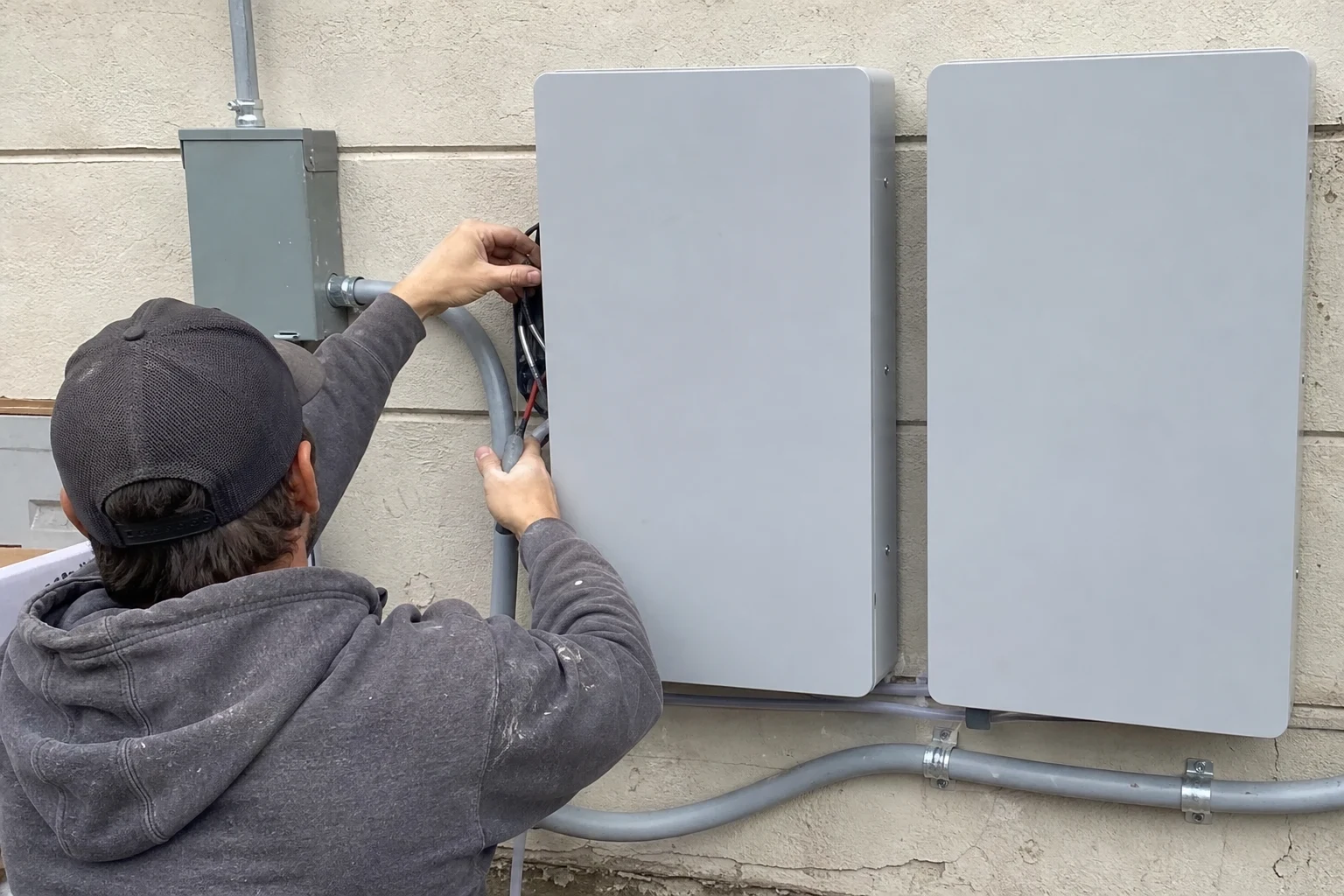
A home battery holds on to the extra power your panels make during the day, then hands it back after sunset or whenever an outage hits. We size it to the circuits you rely on, install it neatly and send you photos of each step.
What a home battery does for you
Without a battery, extra solar power goes back to the utility during the day, and you buy power back in the evening when your family is home and using the most. In Utah, the credit you get for exported power is usually worth less than what you pay for power you pull from the grid. A battery keeps more of your own solar at home, where it is worth the most to you.
It also gives you backup. When an outage hits, the battery switches over and keeps the circuits you chose running: the fridge, the furnace fan, lights, Wi-Fi, a medical device. You decide what matters before the install, so there is no guessing later.
Batteries pair with new solar panel installation or with a system you already have. On a short video call we look at your usage and your current setup, then give you an honest answer on whether a battery makes sense for your home.
What's included in a battery install
- Load review and sizing
- We go through your utility bills and talk about which appliances you want covered in an outage. That tells us how much storage you need, so you are not paying for capacity you will never use.
- Site check you can see
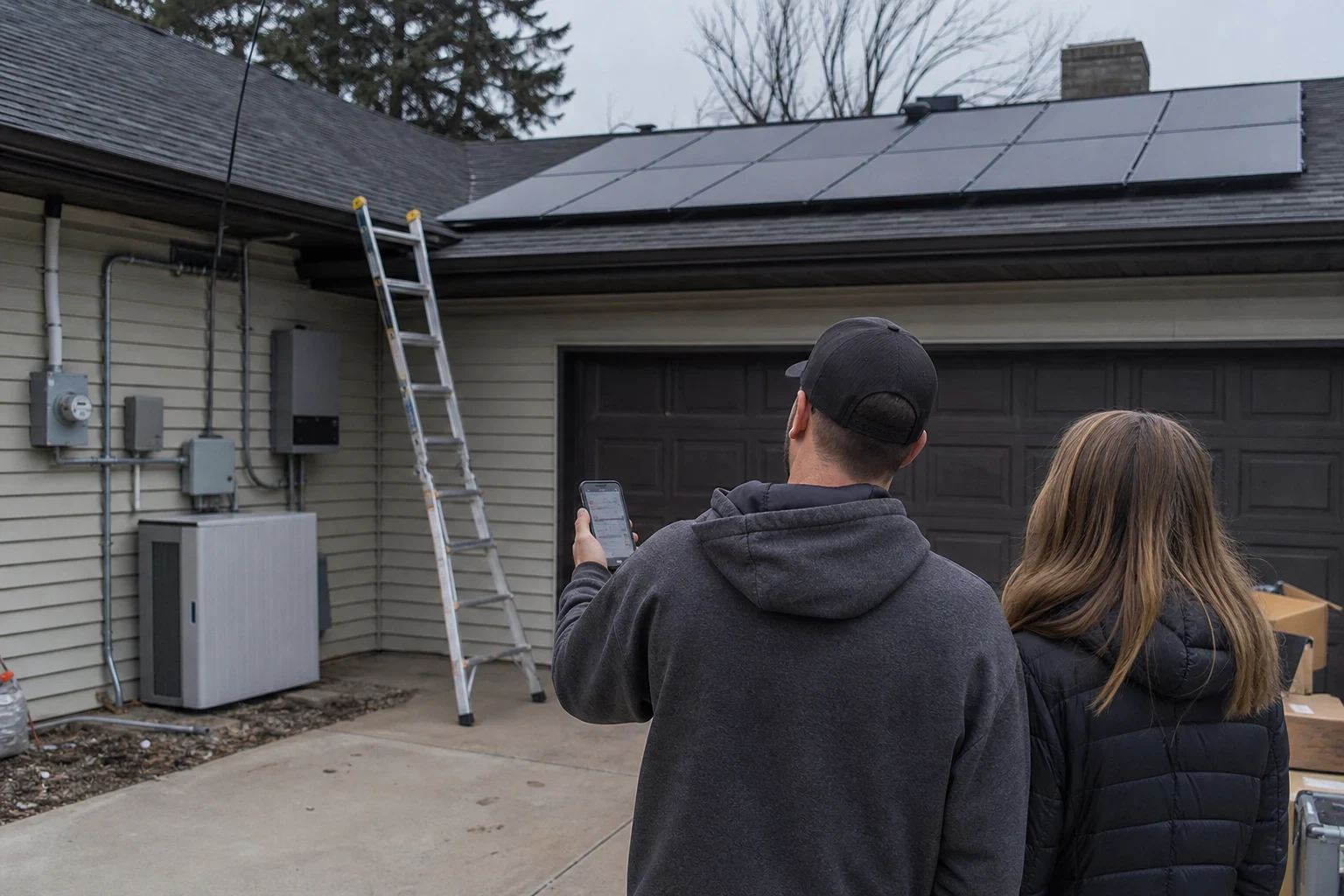
- We inspect your electrical panel, the spot you have in mind on the garage or outside wall, and the route the wiring will take. You get photos of what we found, including anything in the panel that should be fixed first.
- Critical loads panel
- If whole-home backup is not the right fit, we move your chosen circuits to a separate backup panel. The battery then powers exactly those circuits when the grid drops.
- Mounting and wiring
- The battery is mounted on a garage or exterior wall with the clearances the manufacturer and local code require. Conduit is run neatly and labeled.
- Permit, inspection and utility approval
- We pull the building permit, meet the inspector and handle the interconnection paperwork with the utility, so the system is approved before it goes into service.
- Setup and walkthrough
- We set the battery's operating mode, connect the monitoring app to your phone and show you how to read it. Before we leave, you know how everything works and where to look if you have a question.
Signs a battery is right for your home
Your evening bills stay high
You have solar, but your bill barely moves because most of your use happens after sunset. Stored daytime power can cover those hours.
Outages leave you without heat
A winter storm that knocks out power also stops your gas furnace, because its fan and controls need electricity. A battery keeps them running.
Someone at home depends on power
A CPAP, oxygen concentrator or refrigerated medication makes even a short outage stressful. Backup on that circuit removes the worry.
You want to keep more of your solar
If you see a lot of power going back to the grid on your monitoring app, a battery lets you hold on to it for your own use.
You are planning solar anyway
Adding storage during the panel install saves a second round of permits and electrical work.
What moves the cost of battery storage
Battery pricing depends mostly on how much you want covered and how much work your electrical system needs to get there. We put every item in writing before any work starts, so there are no surprises on install day. You get your exact quote by phone after we review your home.
Storage capacity
Covering a few essential circuits takes far less storage than running the whole house, including an air conditioner. More capacity means more battery modules.
Panel condition and upgrades
Older electrical panels sometimes lack the space or rating for a battery. If yours needs an upgrade, we show you photos and explain why.
Backup panel and wiring distance
A separate critical loads panel adds parts and labor. A long run from the panel to the battery location adds conduit and wire.
Installing with or without solar
Adding a battery during a new solar install shares permits and labor. Retrofitting to an existing system can need extra equipment to make the two work together.
How the work goes, step by step
- 1
Free virtual appointment
We meet by video, review your bills and your goals, and take a look at your electrical panel over the camera. You come away knowing whether a battery is worth it for you.
- 2
Site visit and design
We confirm the mounting spot, measure wire runs and check your panel and meter in person. You get a written proposal showing the battery size, the circuits it covers and every line item.
- 3
Permits and approvals
We file the permit and utility paperwork for you, then give you a call with updates while it is under review. Nothing gets installed until the plans are approved.
- 4
Install day
Most battery installs take a single day. Power is off for a few hours while we connect to your panel, and we tell you ahead of time when that will be. We clean up, then send photos of the mounting, wiring and labels.
- 5
System start-up
Once the inspector approves the work and the utility gives permission to operate, we switch everything on. We run a backup test while you watch and get the app working on your phone.
Battery storage questions
My panels are already up. Can a battery still be added?
In most cases it can. The answer comes down to your inverter and your electrical panel. We look at both during the virtual appointment and tell you plainly what it would take, including any extra equipment.
How long will a battery run my home in an outage?
That depends on the battery size and what you are running. Essentials like the fridge, furnace fan, lights and internet can often run through the night, and solar recharges the battery the next day. We give you a realistic estimate based on your own loads.
Where does the battery go?
Most go on a garage wall or an exterior wall near your electrical panel. We follow the manufacturer's clearances and local code, and we talk through the location with you before anything is mounted.
Do batteries handle Utah winters?
Yes. The batteries we install manage their own temperature and are rated for cold garages and outdoor installs. Output can slow on the coldest days, and we factor that into sizing.
Is a big payment needed to get started?
That part is easier than most people expect. We have $0 up front options available, and we lay them out side by side during your free virtual appointment. You can weigh them at your own pace before choosing anything.
See if a battery fits your home
Bring a recent utility bill to a short video call. We will show you what a battery could cover and what it would take to install, with no pressure to decide that day.